
Starting CPAP therapy is a life-changing step toward better health, but the first hurdle is often the most personal: choosing the right interface. In Australia, where sleep health awareness is at an all-time high, patients often find themselves caught in the nasal vs. full face CPAP masks debate.
The “better” mask isn’t the most expensive one; it is the one that stays on your face all night without leaking. Whether you are a dedicated “nose breather” or someone who struggles with chronic congestion, understanding the mechanics of these masks is the key to long-term compliance and restorative sleep.
See more: CPAP Masks Australia: Top Styles, Fit Tips, and What Users Prefer Most
What is a Nasal CPAP Mask?
A nasal CPAP mask is a compact interface designed to deliver pressurised air exclusively through the nose. Unlike larger models, these masks typically sit over the nose in a triangular shape or rest just under the nostrils (nasal cradle/pillows).
How They Work
Nasal masks create a focused seal around the nasal perimeter. By direct-loading the airway through the nose, they leverage the body’s natural filtration and humidification system. This often allows for lower pressure settings compared to full-face alternatives.
Benefits and Outcomes
- Minimalist Design: With fewer contact points, there is a lower risk of skin irritation and “mask marks.”
- Visual Freedom: Most nasal masks do not have a forehead support bar, making it easy to wear glasses or read before bed.
- Ideal for Active Sleepers: Their lightweight nature makes them less likely to shift when you toss and turn.
What is a Full Face CPAP Mask?
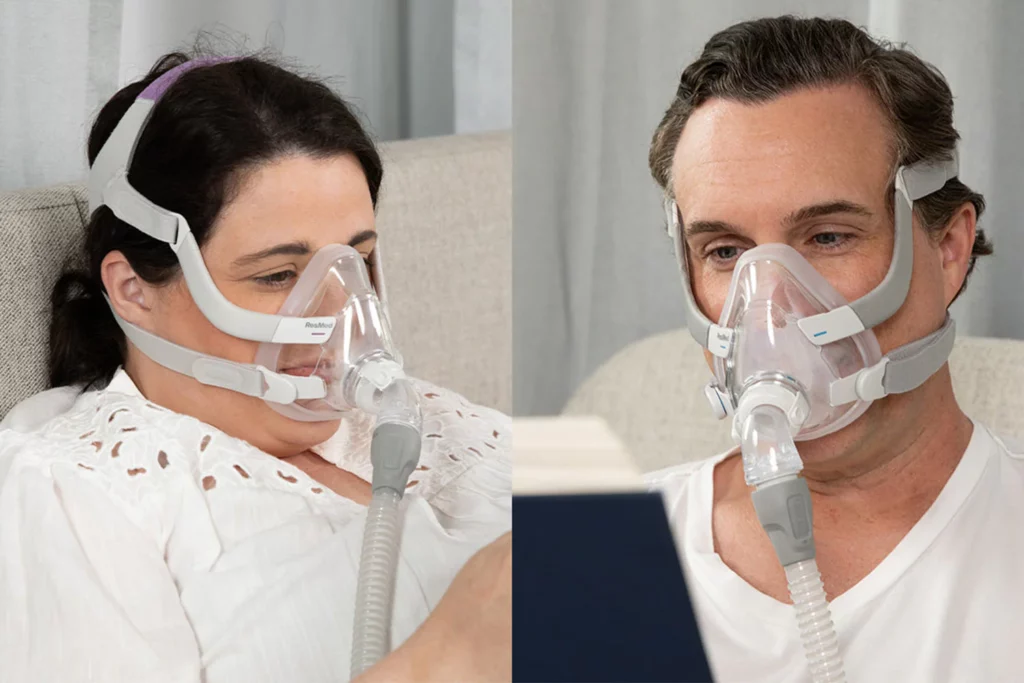
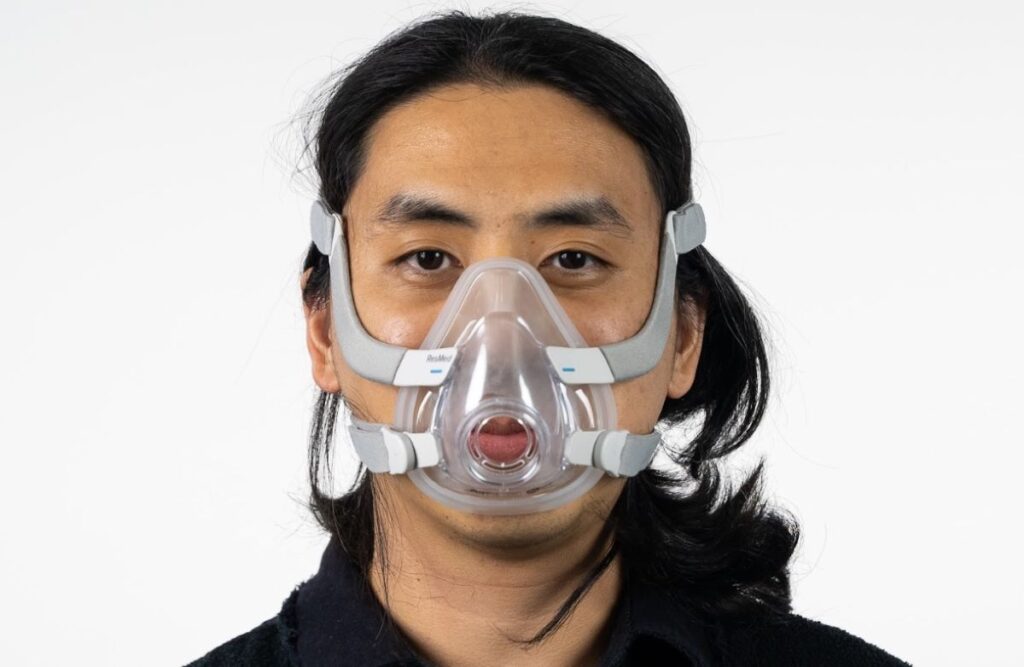
A full face CPAP mask covers both the nose and the mouth. Modern Australian favourites, like the ResMed AirFit F40 or Fisher & Paykel Evora, have evolved from bulky “bubble” designs into streamlined under-the-nose hybrids.
Why the Extra Coverage Matters
These masks are the “safety net” of CPAP therapy. They ensure that even if you breathe through your mouth—whether by habit or due to a blocked nose—the therapy pressure is not lost to the room.
Benefits and Outcomes
- Versatility: Perfect for users who suffer from seasonal allergies or deviated septums.
- High-Pressure Stability: Full face masks distribute pressure over a larger surface area, which is often more comfortable for those on settings above 12 cm H2O.
- Mouth Leak Prevention: They eliminate the “dry mouth” sensation caused by air escaping through an open mouth during nasal therapy.
Key Comparison: Nasal vs. Full Face CPAP Masks
| Feature | Nasal Mask | Full Face Mask |
| Coverage | Nose Only | Nose and Mouth |
| Weight | Very Light (approx. 60–80g) | Heavier (approx. 110–150g) |
| Sleep Position | Side, Stomach, Back | Primarily Back and Side |
| Best For | Nose breathers, Claustrophobia | Mouth breathers, Congestion |
| Field of Vision | Wide / Unobstructed | Varies (Newer models are better) |
Real-World Use Cases in Australia
Scenario A: The Active Side-Sleeper
“John” lives in Queensland and finds summer nights humid. He moves a lot in his sleep. A nasal pillow mask (like the AirFit P30i) is his best bet. The top-of-head tube connection allows him to rotate 360 degrees without getting tangled in his hose.
Scenario B: The Chronic Snorer with Allergies
“Sarah” in Melbourne struggles with hay fever. When her nose blocks up, she instinctively breathes through her mouth. A nasal mask would fail her during these bouts. A full face mask ensures her Sleep Apnea is treated 365 days a year, regardless of her sinus health.
Best Practices for Choosing Your Mask
- Check Your Breathing Style: Do you wake up with a parched mouth? You’re likely a mouth breather and should lean toward a full face mask.
- Use a Sizing Gauge: Most Australian suppliers provide printable PDF templates. Use these to measure the width of your nose and the distance from your bridge to your chin.
- Consider Your Pressure: If your doctor has prescribed a high pressure (e.g., 15 cm H2O), a nasal mask might feel like a “jet engine” in your nose. A full face mask softens this sensation.
- Test for Claustrophobia: If the idea of something covering your mouth causes anxiety, start with a nasal cradle or pillow mask.
Common Mistakes and How to Avoid Them
- Overtightening the Straps: Many new users tighten straps to stop leaks, which actually crushes the silicone seal and causes more leaks. The mask should “float” on a cushion of air.
- Ignoring “Mouth Leak”: If you use a nasal mask but wake up feeling exhausted with a dry mouth, the air is escaping. Consider adding a chin strap or switching to a full face model.
- Using the Wrong Size: A mask that is too large will leak into your eyes; one that is too small will cause sores on the nasal bridge.
Frequently Asked Questions (FAQ)
Can I use a nasal mask if I have a beard?
Yes, but nasal pillows are usually better. For full face users with facial hair, memory foam cushions (like the AirTouch series) provide a much better seal than standard silicone.
How often should I replace my CPAP mask?
In Australia, most clinicians recommend replacing the silicone cushion every 3–6 months and the entire mask/headgear every 12 months to maintain hygiene and seal integrity.
Do I need a referral to buy a mask in Australia?
While you can purchase masks privately, it is highly recommended to have a current prescription from a sleep specialist to ensure the mask type suits your pressure settings.
Will a full face mask make me feel claustrophobic?
Modern “under-the-nose” full face masks leave the bridge of your nose free and your vision clear, significantly reducing the “closed-in” feeling compared to older models.
Can I switch between mask types?
Absolutely. Many Australians keep a nasal mask for regular use and a full face mask in the cupboard for when they have a cold or flu.
Conclusion: Making the Right Choice
In the battle of nasal vs. full face CPAP masks, there is no universal winner—only the “best for you.” If you breathe through your nose and value a lightweight feel, a nasal mask is the gold standard. However, if you are prone to mouth breathing or congestion, a full face mask is the most reliable way to ensure your therapy remains effective.
Internal Linking Suggestions:
- Anchor: “CPAP mask replacement parts”
- Anchor: “How to clean your CPAP mask”
- Anchor: “Best CPAP machines for 2026”
Authoritative External References:
- Sleep Health Foundation (Australia)
- Australasian Sleep Association